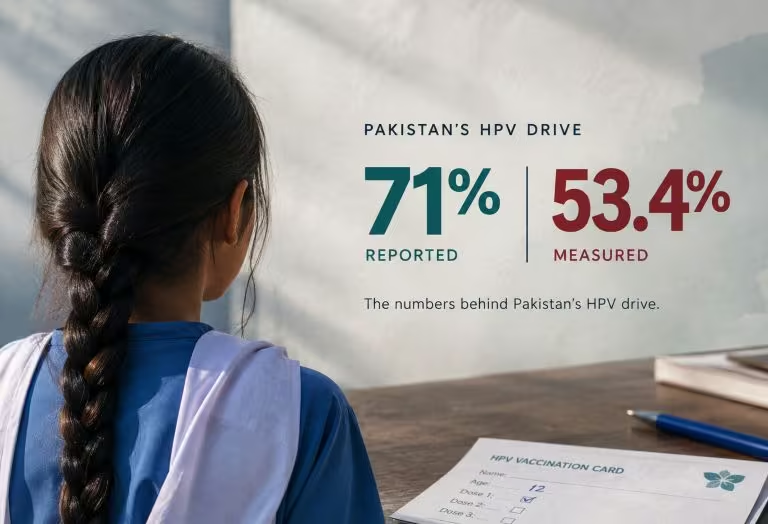
Pakistan’s first HPV vaccination campaign reached 71% of its target girls, according to government data reported by Gavi. A post-campaign survey conducted with WHO oversight put the figure at 53.4%, The News reported in March.
The gap is about 18 percentage points on a target of roughly 13 million girls aged 9 to 14. The survey’s own report said administrative coverage was considerably higher than its estimate and pointed to two possible causes: over-reporting of doses and inaccurate population counts.
Aware Pakistan did not locate a public reconciliation of the two figures. The question is pressing because Khyber Pakhtunkhwa is scheduled to begin its own campaign in November.
Five numbers, five dates
The campaign began Sept. 15, 2025, in Punjab, Sindh, Islamabad Capital Territory and Azad Jammu and Kashmir. WHO said more than 49,000 health workers were trained for the drive.
Dawn reported on Sept. 25, 2025, that about 4.5 million girls, or 34% of the target, had been vaccinated. That count came before the campaign ended.
Dawn and Geo News reported on Sept. 28, 2025, that about half of the intended doses had been given by the end of the campaign’s original window. The campaign was then extended by three days, from Sept. 29 to Oct. 1.
Gavi’s VaccinesWork service reported on Oct. 8, 2025, that coverage reached 71%, about 9.2 million girls, according to government data. The report said 18 districts remained below 60%.
A WHO Eastern Mediterranean feature dated Jan. 6, 2026, reported that more than 9.6 million girls were reached and described coverage as 66%. By Aware Pakistan’s calculation, 9.6 million girls out of 13 million is about 74%, and a 66% rate would imply a target near 14.5 million.
Aware Pakistan did not find a public explanation for that difference. It could reflect rounding or a revised target population.
The 34% figure, in short, was a count taken while vaccination was still under way. It is not the campaign’s final result, and this story does not treat it as one.
What the survey found
The survey was carried out in October 2025 with technical oversight from WHO and the Federal Directorate of Immunization (FDI), The News reported on March 7, 2026. It covered 988 clusters, listed 19,480 households and interviewed 7,769 girls, with a response rate of 85%.
Field work was done by RIZ Consulting and RBC Global Consultants, according to the report. About 10% of the girls interviewed were out of school.
Coverage was 68.6% in Sindh, 47.6% in Punjab, 44.5% in Islamabad and 39.2% in AJK. Punjab is the most populous of the four areas.
Aware Pakistan has not seen the full survey report and relies on The News’s account of it. The survey’s margin of error has not been published in any source reviewed.
Why two methods can disagree
Administrative coverage counts doses recorded by vaccinators against an estimated population of eligible girls. A household survey estimates coverage by asking families and checking records.
Differences between the two are common in immunization programs. What matters here is size. The survey report itself, as The News described it, treated the difference as a sign that administrative figures may be overstated or that the population estimates behind them may be off.
The stakes
Cervical cancer is the reason for the campaign. WHO has said Pakistan records more than 5,000 new cases and about 3,000 deaths from the disease each year.
Public awareness was low before the drive began. A Sindh survey reported by The News on Aug. 7, 2025, found that 5% of caregivers had heard of HPV and 2% knew of the vaccine.
Misinformation followed. Dawn and Geo reported on Sept. 28, 2025, that false claims linking the vaccine to infertility spread on social media and led some parents to refuse it.
The vaccine is meant to move into routine immunization for 9-year-old girls after the campaign, according to WHO. That plan depends on knowing which girls were reached and which were not.
What comes next in Khyber Pakhtunkhwa
Khyber Pakhtunkhwa is scheduled to hold its campaign in November 2026, Pakistan Today reported on July 11. The province plans to target about 2.9 million girls, of whom about 1.6 million are in school and 1.3 million are out of school. Other reports put the target at 3.2 million.
Health workers in the province were trained in June, according to local news reports. No postponement had been announced as of Sept. 30.
The out-of-school group is large in the KP plan. The national survey found that out-of-school girls made up about 10% of those interviewed.
Balochistan and Gilgit-Baltistan are planned for 2027, according to Dawn’s Sept. 25, 2025, report.
What has not been answered
Aware Pakistan did not find public answers to these questions:
- Whether the post-campaign survey has been published in full.
- What the survey’s margin of error is.
- Whether the target population changed after launch.
- How many girls were vaccinated in each district, and how many doses were given after the official campaign window.
- Why WHO’s 9.6 million and 66% figures do not match a 13 million target.
What we asked, and what we heard
Aware Pakistan emailed written questions to WHO Pakistan and the Federal Directorate of Immunization. The questions asked for a final validated coverage report and for an explanation of the differences among the published figures.
Neither organization had responded by the time of publication. This story will be updated if they do.
What should happen next?
Publishing the survey report in full, together with district-level administrative data and the target population used, would allow the two sets of figures to be compared directly. That comparison would inform the Khyber Pakhtunkhwa campaign before it begins.